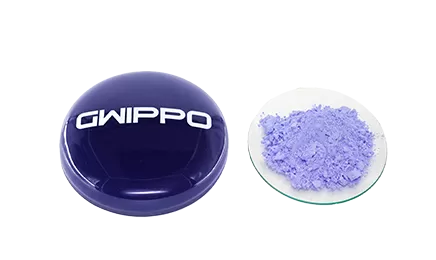
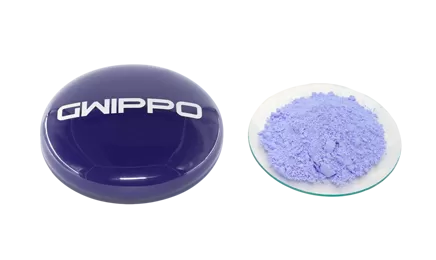
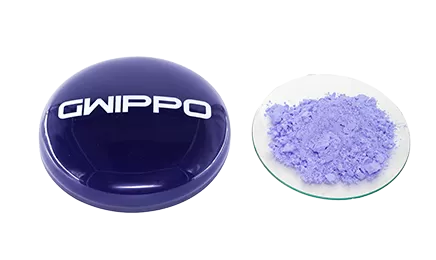
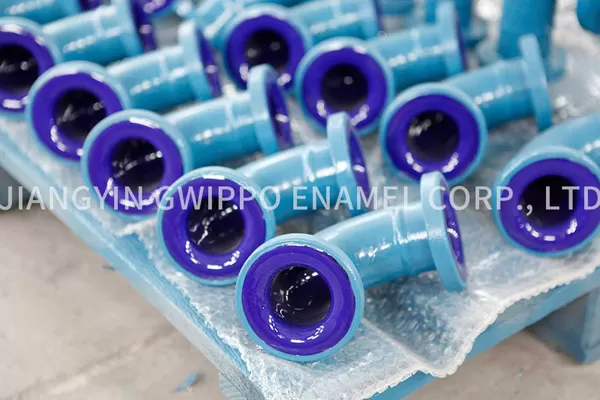
The vitreous enamel coating process is a controlled sequence of preparing the metal substrate, applying enamel frit and firing it at high temperature until the enamel melts and fuses to the metal. Unlike conventional paint, vitreous enamel does not simply dry or cure on the surface; it forms a hard, glass-like coating through high-temperature firing.
The process is widely used for glass-lined equipment, water heater tanks, cookware, panels, heat exchangers and other corrosion-resistant industrial components. GWIPPO supplies vitreous and porcelain enamel frit, glass-lined ground coat and cover coat materials for manufacturers that require stable coating performance throughout application and firing.vitreous and porcelain enamel fritglass-lined ground coatglass-lined cover coat
Step 1: Metal Surface Preparation
Metal surface preparation is the first stage of the vitreous enamel coating process. Oil, rust, oxide scale and other contaminants must be removed to create a clean and consistent surface for enamel bonding. Poor surface preparation can contribute to defects such as weak adhesion, pinholes, fish scaling or peeling after firing.
The process commonly includes degreasing, pickling or mechanical cleaning, rinsing and drying, depending on the substrate and production requirements. For steel substrates, oil and surface contamination are removed before the metal is cleaned to provide a suitable surface for enameling. Thorough rinsing is important because residual chemicals can interfere with enamel adhesion and firing performance.
For industrial porcelain enamel, substrate quality matters. ASTM A424/A424M porcelain-enameling steel sheet specification is often referenced when manufacturers need steel materials suitable for enamel coating. In actual production, the surface must be clean, active and consistent before ground coat application.
Step 2: Enamel Frit Milling and Slurry Preparation
Enamel frit preparation involves milling the glass-based frit and preparing it as a usable slurry or powder for application. The objective is to achieve suitable particle size, suspension stability, application properties and firing behavior.
For wet enamel application, frit is typically mixed with water and appropriate suspension agents, electrolytes or other process additives. The mixture is milled to the required fineness and adjusted for the selected application method. Coarse particles can contribute to a rough or incompletely fused surface, while poor slurry stability can lead to sedimentation and inconsistent coating thickness.
Process Variable | Why It Matters | Possible Problem if Poorly Controlled |
Frit particle size | Affects surface smoothness and melting behavior | Rough surface or incomplete fusion |
Slurry viscosity | Affects spraying or dipping uniformity | Sagging, uneven coating or thin areas |
Suspension stability | Keeps solids evenly distributed | Sedimentation and batch inconsistency |
Water content | Controls drying behavior | Cracking, bubbles or long drying time |
Additive balance | Supports slurry application and stability | Poor flow, crawling or coating defects |
Because porcelain enamel is an inorganic vitreous coating fused to metal, frit chemistry, milling conditions and firing behavior must be matched to the substrate, application method and intended service environment.inorganic vitreous coating fused to metal
Step 3: Ground Coat Application
Ground coat is the first enamel layer applied directly to the prepared metal surface. It plays a critical role in developing the bond between the steel substrate and the overall enamel coating system.
Ground coat may be applied by spraying, dipping, flow coating or electrostatic powder application, depending on the product geometry and production line. For tanks, vessels and complex industrial components, wet spraying is commonly used in many production processes because it allows controlled application on curved and internal surfaces.
The applied layer should be uniform, with adequate coverage and without excessive buildup. Insufficient or uneven ground coat coverage can compromise the coating system, while excessive thickness may increase firing stress or contribute to surface defects. GWIPPO’s glass-lined ground coat materials are designed to support reliable bonding in industrial enamel systems where adhesion and corrosion protection are both important.
Step 4: Drying Before Firing
Drying removes moisture from the applied enamel layer before the coated component enters the furnace. Proper and uniform drying helps reduce moisture-related defects during firing.
If excessive moisture remains in the enamel layer, rapid heating may contribute to bubbles, cracks, blisters or pinholes. Drying temperature and time depend on factors such as component geometry, coating thickness, airflow, humidity and production layout. The objective is to obtain a dry, stable coating suitable for furnace entry without initiating the firing process prematurely.
For large industrial components, drying must be even. Corners, weld areas, internal surfaces and thick coating zones may dry more slowly than open flat areas. Uneven drying can lead to local defects after firing.
Step 5: High-Temperature Firing and Controlled Cooling
Firing is the key stage of the vitreous enamel coating process. At the correct temperature, the enamel softens, melts and flows, developing a continuous glass-like coating that fuses to the metal substrate.
The required firing temperature depends on the enamel formulation, substrate and application. Industrial porcelain enamel systems are fired at elevated temperatures within a controlled firing window. GWIPPO water heater enamel systems, for example, are typically fired at approximately 830–860°C, allowing the enamel to fuse with and bond firmly to the prepared steel substrate.ASM porcelain enamel firing reference
Firing control includes temperature, time, heating rate, furnace atmosphere and component placement. Insufficient firing can result in incomplete fusion, poor surface development or inadequate bonding, while excessive firing can cause color change, deformation, surface defects or excessive reaction at the metal-enamel interface.
Controlled cooling after firing is also important because the glass coating and metal substrate respond differently to temperature change. Excessive thermal stress during cooling may contribute to cracking, chipping or reduced thermal-shock performance.
Step 6: Cover Coat, Final Firing and Inspection
Cover coat is the final enamel layer used to provide the required surface finish and service properties, such as chemical resistance, corrosion protection and appearance. In a conventional two-coat system, the cover coat is applied after the ground coat has been fired, then dried and fired again.
The cover coat should be selected according to the intended service environment. Chemical vessels may require specific acid or alkali resistance, while water heater tanks require hot-water resistance and long-term coating stability. For visible panels or cookware, color, gloss and surface finish may also be important.
Final quality control typically includes inspection of surface appearance, adhesion, coating thickness, pinholes or exposed metal, impact resistance and relevant chemical durability. The exact inspection program should be selected according to the product, applicable standard and service requirements.porcelain enameling process
Inspection Item | What It Checks | Why It Matters |
Visual inspection | Color, gloss, bubbles, cracks and pinholes | Confirms basic surface quality |
Thickness check | Coating uniformity | Prevents weak protection or stress |
Spark / holiday test | Exposed metal or coating discontinuities | Important where specified for glass-lined equipment |
Adhesion test | Bonding strength | Prevents peeling or spalling |
Impact test | Resistance to mechanical shock | Supports handling and service reliability |
Chemical resistance test | Acid, alkali or water resistance | Confirms application performance |
GWIPPO’s glass-lined cover coat materials are designed for tanks, vessels and chemical equipment where a smooth enamel surface and reliable corrosion resistance are required.glass-lined cover coat
Conclusion
The vitreous enamel coating process includes metal preparation, frit milling and slurry preparation, enamel application, drying, high-temperature firing, cooling and final inspection. In multi-coat systems, ground coat and cover coat application and firing are carried out in sequence. Each stage can directly affect adhesion, surface quality, corrosion resistance and long-term coating performance.
For manufacturers, key process controls include a clean and consistent metal surface, stable slurry properties, uniform coating application, proper drying, an appropriate firing window and systematic final inspection. GWIPPO supplies vitreous enamel frit, ground coat and cover coat materials for glass-lined equipment, water heater tanks and other industrial enamel applications.
FAQ
1. What is the vitreous enamel coating process?
It is a high-temperature coating process in which enamel frit is applied to a prepared metal substrate and fired until it melts, flows and fuses to the metal as a glass-like protective layer.
2. What is the first step in enamel coating?
The first step is proper metal surface preparation. Depending on the substrate and process, this may include degreasing, rust or scale removal, pickling or mechanical cleaning, rinsing and drying before enamel application.
3. Why is ground coat needed?
Ground coat forms the bonding interface between the prepared metal substrate and the enamel coating system. Correct formulation, application and firing are important for reliable adhesion and long-term coating stability.
4. Why must enamel coating be dried before firing?
Drying removes moisture from the applied enamel before firing. Excess residual moisture can contribute to defects such as bubbles, cracks, blisters or pinholes during rapid heating.
5. What temperature is used for vitreous enamel firing?
Firing temperature depends on the enamel formulation, substrate and product design. Some industrial water heater enamel systems, including GWIPPO systems described in this article, are typically fired at approximately 830–860°C.
6. What quality checks are used after enamel coating?
Common quality checks include visual inspection, coating thickness, adhesion, spark or holiday testing where applicable, pinhole detection, impact resistance and relevant chemical or hot-water resistance testing.

 CN
CN