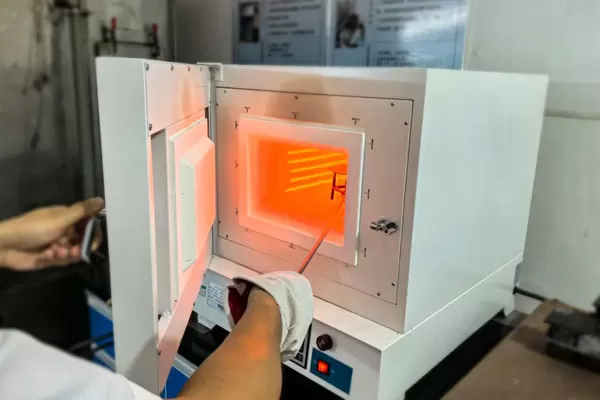
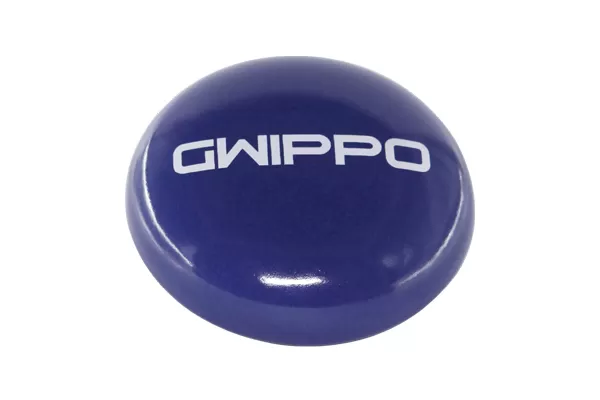
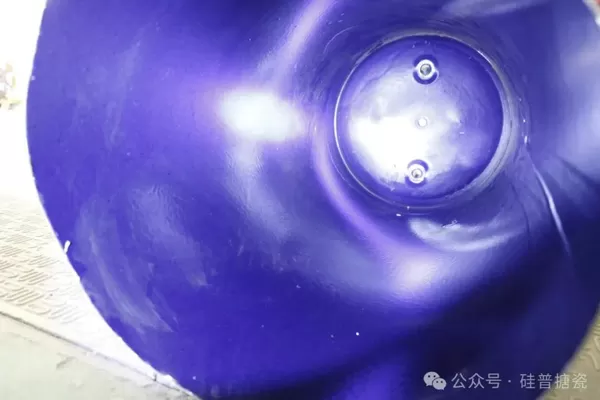
During the firing process of the ground coat enamel, complex physical and chemical reactions occur between the steel substrate and the ground coat. In an oxidizing atmosphere, an oxide film forms on the steel surface, allowing the molten ground coat enamel to wet the steel substrate. As iron oxide gradually dissolves into the enamel, a strong bonding layer is formed between the steel substrate and the enamel coating. Experiments have shown that if enameling is carried out under insufficient oxidizing conditions, even with sufficient and high-quality bonding agents, the bonding layer is difficult or impossible to form.
The firing process of ground coat enamel can generally be divided into five stages. The physical and chemical reactions, enamel state changes, and characteristics of each stage are described below.
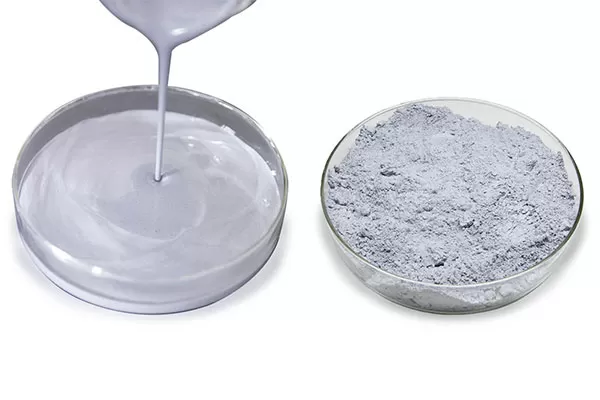
Reactions, State Changes, and Characteristics During Ground Coat Firing
Stage 1 (Room Temperature ~ 150°C)
The main purpose of this stage is to remove adsorbed moisture from the powder layer. As the temperature rises, a large amount of absorbed water evaporates from the powder layer, and some mill-added materials begin to decompose, preparing the surface for subsequent firing reactions.
Stage 2 (150°C ~ 400°C)
At temperatures between 150°C and 400°C, structural water in the clay is removed, organic materials decompose, and oxidation reactions occur on the surface of the steel substrate.
During this process, tiny cracks appear in the powder layer due to the removal of structural water, while the steel substrate oxidizes to form iron oxide. The characteristic sign marking the end of this stage is the appearance of fine cracks in the powder layer and the beginning of sintering.
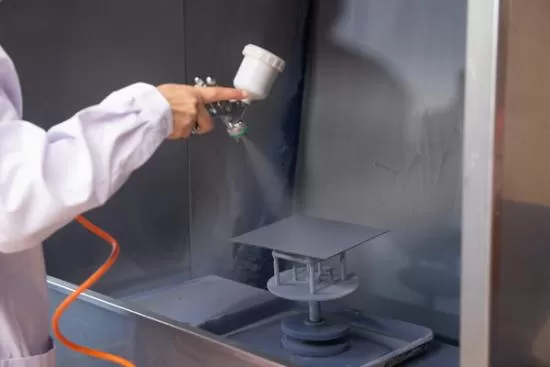
Stage 3 (400°C ~ 600°C)
During the firing stage from 400°C to 600°C, the powder layer undergoes sintering, and oxidation-reduction reactions begin between the steel substrate and the ground coat enamel.
At this stage, structural water continues to be removed, the enamel layer becomes fully sintered and starts to soften, and some gas channels become sealed. The end characteristic of this stage is that the bonding agent begins oxidation-reduction reactions with the steel substrate, although effective adhesion between the enamel and steel has not yet formed.
Stage 4 (600°C ~ Firing Temperature)
Once the temperature exceeds 600°C, the process enters the fourth stage, where the key reaction is the formation of the bonding layer.
During this stage, the powder layer becomes completely molten. The bonding agent is displaced by iron and deposited onto the steel substrate surface, while electrochemical corrosion takes place. Iron oxide dissolves into the ground coat enamel, and mutual penetration occurs between the steel substrate and the enamel layer. Dendritic crystals begin to form within the bonding layer.
The characteristic sign of this stage is that the enamel surface starts to become glossy, although small pores are still present, and the bonding layer begins to form.
Stage 5 (Holding Period After Reaching Firing Temperature)
After reaching the firing temperature, the process enters a holding stage for a certain period of time. This is the critical stage that determines the final firing quality of the product. The main objective is to gradually eliminate pores and achieve optimal adhesion.
At this stage, the ground coat enamel is fully molten and possesses a certain degree of fluidity. Residual gases continue to escape, while oxidation-reduction reactions between the bonding agent and iron continue within the enamel. Iron oxide continues dissolving, and the mutual penetration between the enamel and the steel substrate accelerates. The intermediate bonding layer thickens gradually, and pores are progressively sealed until firing is completed.
The characteristic sign marking the end of this stage is that all firing conditions have been satisfied. If the product is not removed from the furnace at this point, over-firing may occur. Excessive dissolution of iron oxide can negatively affect the adhesion performance of the enamel coating.


 CN
CN