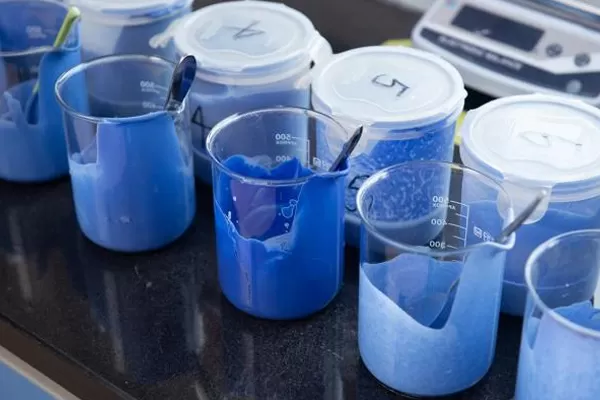
Enameled cast iron is cast iron coated with a fired vitreous enamel layer to improve corrosion resistance, surface hardness, chemical durability and long-term protection. In industrial applications, it is not mainly about cookware aesthetics; it is about using a glass-like inorganic coating to protect metal parts from water, chemicals, abrasion and thermal stress.
For equipment manufacturers, coating plants and industrial buyers, the performance of enameled cast iron depends on the cast iron substrate, surface preparation, enamel frit formulation, ground coat adhesion, cover coat resistance and firing control. GWIPPO provides Vitreous and Porcelain Enamels for industrial coating systems, including glass-lined ground coat and cover coat solutions for demanding anti-corrosion applications.
What Is Enameled Cast Iron in Industrial Use?
Enameled cast iron in industrial use refers to cast iron components protected by a porcelain or vitreous enamel coating fused to the metal surface through high-temperature firing. The cast iron provides mechanical strength, while the enamel layer provides a dense, hard and chemically resistant barrier.
Cast iron is an iron-carbon alloy generally containing more than 2% carbon. It is strong, durable and easy to cast into complex shapes, making it suitable for valves, pump housings, pipe fittings, tanks, equipment covers and structural components. However, untreated cast iron can rust or corrode in wet, acidic or chemically aggressive environments. Enameled coating helps isolate the metal from external media.
The European Enamel Association describes porcelain and vitreous enamel as a mainly vitreous material obtained by melting or fritting inorganic materials and applying them to metal. This definition makes enameled cast iron different from ordinary paint or polymer coating, because enamel becomes a glass-like layer bonded to the metal surface.
How Does Porcelain Enamel Protect Cast Iron?
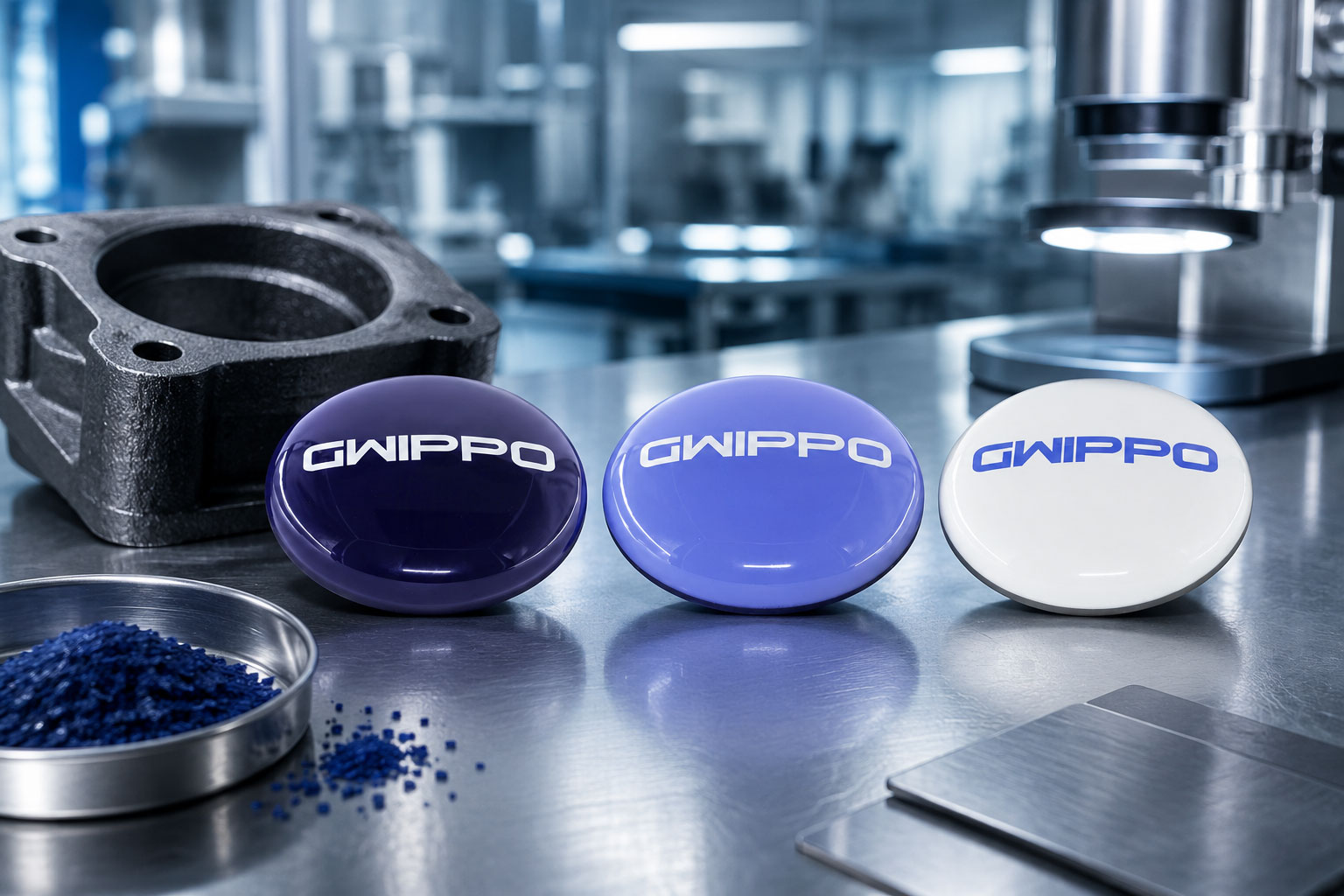
Porcelain enamel protects cast iron by forming a dense inorganic barrier that improves resistance to chemicals, abrasion, water and thermal stress. This protective function is why enamel coatings are widely used in industrial equipment, water systems, chemical processing and corrosion-resistant metal parts.
The coating system usually includes a ground coat and a cover coat. The ground coat is responsible for bonding to the metal substrate and reducing coating failure risks such as poor adhesion or fish-scaling. The cover coat provides the final functional surface, including acid resistance, alkali resistance, smoothness, hardness and high-temperature stability.
GWIPPO’s Glass-Lined Ground Coat is designed for adhesion strength, fish-scaling resistance, optimized bubble distribution and thermal expansion matching with steel substrates. GWIPPO’s Glass-Lined Cover Coat focuses on acid erosion resistance, alkali corrosion resistance, high-temperature stability and prevention of enamel spalling.
According to EPA information on porcelain enameling industrial coating, porcelain enameling applies glass-like coatings to metals such as steel, cast iron, aluminum and copper to improve resistance to chemicals, abrasion and water, while also improving thermal stability, electrical resistance and appearance.
Industrial Applications of Enameled Cast Iron
Industrial applications of enameled cast iron include metal parts and equipment that require corrosion protection, cleanable surfaces, chemical resistance and long service life. It is especially useful where ordinary metal surfaces may rust, scale or react with process media.
Common application areas include water tanks, heat exchange parts, pipe fittings, valves, pump bodies, reactor accessories, storage containers, sanitary equipment, environmental equipment and industrial hardware. In these products, enamel coating can help reduce maintenance, improve cleanliness and extend service life when the formulation is properly matched to the substrate and operating conditions.
For aggressive environments, the coating must be selected according to acid concentration, alkali exposure, temperature, mechanical impact, cleaning process and thermal cycling. A coating used for water-contact components is not always suitable for chemical equipment, and a decorative enamel is not the same as an industrial anti-corrosion enamel.
Enameled Cast Iron vs Other Metal Surface Treatments
Enameled cast iron should be compared with paint, powder coating, galvanizing and stainless steel according to corrosion resistance, temperature resistance, surface hardness and lifecycle cost. Each solution has its own advantages, but porcelain enamel is stronger when a hard, inorganic and chemically resistant surface is required.
Surface Treatment | Main Feature | Typical Strength | Limitation |
Porcelain Enamel on Cast Iron | Fired glass-like inorganic coating | Chemical resistance, abrasion resistance, heat stability | Requires correct firing and substrate matching |
Industrial Paint | Organic coating | Low cost, flexible color options | Lower heat and chemical resistance |
Powder Coating | Dry-applied polymer coating | Good appearance and moderate durability | May soften or degrade under high heat |
Galvanizing | Zinc protection layer | Good anti-rust performance for steel | Limited chemical resistance in some media |
Stainless Steel | Corrosion-resistant alloy | Strong structural and sanitary performance | Higher material cost |
Porcelain enamel coatings are typically fired at high temperature. A review in Porcelain Enamel Coatings notes that firing temperature can range from 450°C to 1200°C depending on the substrate. This high-temperature fusion process is a key reason enamel can form a hard, durable and glass-like coating.
How to Choose Enamel Frit for Cast Iron Coating
Choosing enamel frit for cast iron coating means matching the frit composition, thermal expansion, firing temperature, adhesion behavior and chemical resistance to the metal part and operating environment. A good enamel frit should not only melt well; it should create a stable coating system that performs reliably after production.
Buyers should evaluate coating adhesion, acid and alkali resistance, surface smoothness, pinhole control, color stability, impact resistance, thermal shock performance and production consistency. For cast iron parts, the difference between the metal expansion behavior and the enamel layer must be controlled carefully, because mismatch may lead to cracking, peeling or coating stress.
GWIPPO is a China enamel frit and porcelain enamel frit supplier with 30 years of R&D experience and experience in drafting 8 national standards. Its industrial enamel solutions include acid and alkali resistant enamel frits, ground coats and specialty vitreous enamel coatings for extreme chemical and industrial environments. For manufacturers seeking stable industrial coating performance, GWIPPO can support material selection, coating process optimization and product-specific enamel formulation.
Conclusion
Enameled cast iron is an industrial metal protection solution that combines the strength of cast iron with the corrosion resistance, hardness and chemical durability of porcelain enamel coating. It is suitable for applications where metal parts must resist water, chemicals, abrasion, cleaning processes and long-term environmental exposure.
For industrial buyers, the real value of enameled cast iron depends on coating quality. The enamel frit, ground coat, cover coat, firing process and substrate matching all affect final performance. GWIPPO provides industrial vitreous and porcelain enamel solutions for companies that need reliable anti-corrosion coatings, stable production quality and professional enamel material support.
FAQ
1. What is enameled cast iron?
Enameled cast iron is cast iron coated with a fired porcelain or vitreous enamel layer to improve corrosion resistance, hardness, water resistance and chemical durability.
2. Is enameled cast iron only used for cookware?
No. Although it is common in cookware, enameled cast iron is also used in industrial parts, water systems, valves, pump components, tanks, sanitary equipment and corrosion-resistant metal products.
3. What is the difference between enamel coating and paint?
Enamel coating is a fired inorganic glass-like layer bonded to metal, while paint is usually an organic coating applied at lower temperature. Enamel generally offers better heat, abrasion and chemical resistance.
4. Why is ground coat important in enameled cast iron?
Ground coat helps the enamel system bond to the metal substrate. Good ground coat performance improves adhesion, reduces fish-scaling risk and supports long-term coating stability.
5. What causes enamel coating failure on cast iron?
Common causes include poor surface preparation, wrong frit selection, thermal expansion mismatch, firing problems, pinholes, impact damage or unsuitable chemical exposure.
6. Why choose GWIPPO for industrial enamel frit?
GWIPPO provides vitreous and porcelain enamel frit, glass-lined ground coat and cover coat solutions for industrial anti-corrosion applications, supported by R&D experience, standards participation and coating process knowledge.

 CN
CN