Abstract
The performance of a glass-lined enamel coating is closely related to the chemical composition of the enamel glaze, the frit smelting process, the enameling/firing process, the thickness and uniformity of the enamel layer, and defect control of the enamel coating. The coating performance determines the service life of glass-lined equipment. Off-color spots are one of the common defects in glass-lined enamel coatings. This paper analyzes the causes of off-color spots and proposes practical solutions for different situations.
Keywords: glass lining; glass-lined equipment; off-color spots; acid resistance; enameling/firing process
In China, glass lining is commonly known as “industrial enamel”, a term extended from the concept of enamel.
1. Definition of Glass Lining
Glass lining refers to a functional composite material formed by coating a metal substrate with a vitreous enamel glaze (mainly glassy phase, containing a small amount of mill additions, bubbles, etc.) and firing it at high temperature, resulting in a smooth surface with strong acid resistance, alkali resistance and high-temperature resistance [1–2].
From the definition, glass lining has the following characteristics:
(1) It consists of two materials;
(2) It is fired at high temperature and involves physico-chemical reactions;
(3) The two materials form a tight and durable bond;
(4) It is a composite material with special properties. Equipment made of glass-lined materials is referred to as glass-lined equipment.
2. Sources of Off-Color Spots in Glass-Lined Enamel Coatings
2.1 Originating from Enamel Frit
During frit smelting, if some areas of the batch are not fully melted for a long time, the quartz and feldspar may remain in a sintered state. In particular, quartz readily undergoes polymorphic transformation at around 1100~1300°C to form a type of “opal-like” crystalline phase. Its density is lower than that of the glass melt, and it is difficult to dissolve into the molten glass at this temperature. After cooling, it remains in the enamel frit. During firing, because the firing time is relatively short, these crystals cannot dissolve into the enamel either, resulting in faint off-color spots in the coating.
Feldspar (especially when quartz and feldspar are moist) may also sinter into feldspathic crystalline phases that are difficult to vitrify, which can likewise lead to off-color spots.
2.2 Originating from Mill Additions (Clay)
If the clay is damp, during ball milling it may exist as fine discrete particles. At around 900 °C, clay transforms into metakaolin (dehydrated kaolinite). The resulting crystals are white and can appear as faint off-color spots after firing.
2.3 Originating from the Ball-Milling Process
The ball mill lining and grinding media are typically alumina (Al₂O₃). Alumina is a white crystalline powder/solid with a melting point of about 2050 °C. If the lining or grinding media are damaged during milling, fine alumina crystal particles may be introduced into the enamel powder, producing obvious off-color spots after firing.
2.4 Originating from the Firing Process
If oil/water vapor is present in the spray gun due to insufficient filtration, the oil-water mixture can cause light-colored off-color spots.
If the furnace lining is damaged, the furnace atmosphere may contain certain amounts of SO₂ and CO₂ from flue gas. These react with free Na⁺ in the enamel coating to form white sodium salts such as Na₂SO₄ and Na₂CO₃.
If the spraying environment is not an enclosed, independent room, impurities may enter the enamel layer during spraying and drying or fall onto the coating surface. Dust/impurities may also fall onto the enamel surface when the furnace door is opened during loading/unloading. These contaminants can cause off-color spots.
Water droplets or sweat accidentally dripping onto the unfired enamel layer during spraying can also cause off-color spots.
2.5 Originating from the Powder-Soaking Container
If plastic containers are used for powder soaking, plastic debris may peel off after long-term use and mix into the slip. After firing, organic-contamination off-color spots may appear.
2.6 Originating from Water Used to Prepare the Enamel Slip
Tap water or well water may contain impurities such as organic matter, crystalline CaCO₃, sulfates, etc. Sulfate ions can react with free Na⁺ in the enamel to form salts.
3. Cause Analysis and Corrective Actions for Off-Color Spots
If off-color spots occur, on-site observation and analysis should be conducted first, followed by targeted corrective actions.
3.1 Characteristics and Solutions for Frit-Related Off-Color Spots
If the frit contains locally unmelted components, the glass-lined enamel coating may show faint, tiny white off-color spots. These are fused within the coating and do not protrude from the surface.
Corrective actions: Strictly control the moisture of incoming raw materials; ensure batch mixing uniformity meets the standard; guarantee the frit is free from unmelted components.
3.2 Characteristics and Solutions for Clay-Related Off-Color Spots
Spots caused by mill-added clay are generally smaller than 250 μm in radius, embedded in the coating and flush with the surface (no raised feel). To the naked eye they appear as hazy, fine white dots; under a magnifier they appear as densely distributed micro-pores.
Corrective actions: Thoroughly dry the clay; control moisture to below 0.5%.
3.3 Characteristics and Solutions for Ball-Milling-Related Off-Color Spots
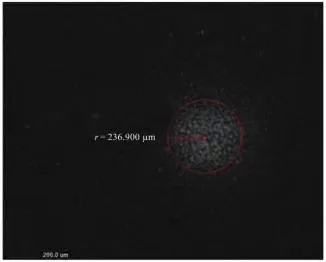
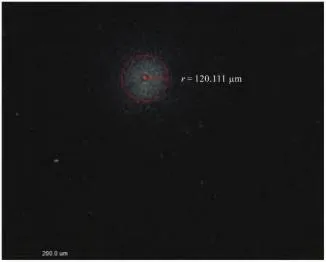
When enamel slip is contaminated by damaged mill lining or grinding media, the spots appear as relatively regular, small bright off-color points, with a radius of about 120 μm (when the screen is intact). They are embedded and flush with the surface (no raised feel).
Corrective actions: Inspect the mill lining and grinding media in time; replace or repair immediately if damaged.
3.4 Off-Color Spots Caused by Non-Standard Firing Control and Solutions
(1) Oil/water vapor in the spray gun tends to cause off-color spots with irregular shapes and relatively large affected areas; the spots are obvious but not raised.
Corrective actions: Install an oil-water separator and drain it daily on schedule. Check the spray gun and air hoses for oil/water before spraying. Replace or repair filters promptly if needed.
(2) Furnace damage may allow excessive SO₂/CO₂ into the furnace atmosphere, leading to white sodium sulfate/carbonate deposits formed from free Na⁺ on the coating surface.
Corrective actions: Inspect the furnace regularly; repair damage promptly; provide an exhaust vent at the top of the furnace.
(3) Workshop environment is critical. Dust/impurities falling onto the coating surface create spots of variable size and shape, in white, yellow-brown, gray-white, etc. Most can be felt as raised defects by touch.
Corrective actions: Use an enclosed spraying area equipped with dust removal; clean the spray booth regularly. Keep the drying area floor and surroundings clean and dust-free. Clean and maintain the furnace periodically. Monitor furnace atmosphere; the ideal condition is slight negative pressure. Excessive negative pressure may draw dust into the furnace when the door is opened. Apply a thin ground coat on non-enamelled surfaces to prevent scale formation.
(4) Water/sweat droplets falling onto the unfired enamel layer produce large, obvious spots after firing, typically circular (regular) or irregular; not raised.
Corrective actions: Establish work instructions clearly stating precautions and require strict compliance by operators.
3.5 Characteristics and Solutions for Container-Related Off-Color Spots
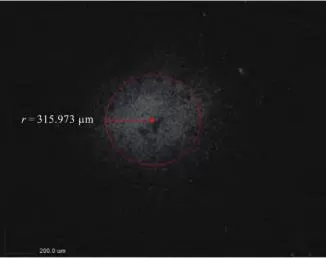
If plastic containers used for slip preparation age over time, plastic chips from the rim may mix into the slip, producing obvious off-color spots after firing. These are generally fused flat into the enamel layer. Under a microscope, dense bubbles are observed at the defect, typically with a radius of about 315 μm.
Corrective actions: Use stainless-steel containers for powder soaking and slip storage. Containers and stirring tools must be cleaned promptly after daily use.
3.6 Characteristics and Solutions for Water-Related Off-Color Spots
Tap/well water varies by region and may contain impurities. Off-color spots caused by impurities (e.g., organic matter, crystalline CaCO₃, salts formed by sulfate ions reacting with free Na⁺) are typically white. These spots vary in shape and size, are often densely distributed, and most can be felt as raised defects.
Corrective actions: To ensure stable product quality, use distilled water or deionized (DI) water to prepare enamel slip. Strictly control the quality of alcohol added during slip preparation; it is recommended to select suppliers with stable quality.

4. Conclusion
The glass-lining manufacturing process is complex. Product quality is related to the steel plate quality, forming process, surface pretreatment, enamel quality, application operation, firing process, furnace condition, furnace atmosphere, storage conditions, assembly quality, transportation, installation, use, and maintenance [4–5]. Therefore, producing high-quality glass-lined products requires strict control at every step.
Authors: Chen Hongmei, Zhang Qian, Jiang Weizhong
Citation: This article is cited from Glass Enamel & Spectacles, 2023, Vol. 51, No. 2.
References:
[1] Jiang Weizhong, Li Yijun. Enamel and Glass Lining [M]. Beijing: China Light Industry Press, 2015.
[2] Lu Jinbiao. China Enamel Handbook [M]. Beijing: China Light Industry Press, 2001.
[3] Yu Xianzhong, Chen Hongmei. A brief discussion on the causes of easy sedimentation of cover-coat enamel slip for glass lining and the countermeasures [J]. China Enamel, 1992, 13(4): 4.
[4] Yu Xianzhong, Chen Hongmei. Advantages of controlled firing for large glass-lined equipment and requirements for enamel glaze [J]. Glass and Enamel, 2006(3): 16–19.
[5] Zhang Qian, Jiang Weizhong. Characteristics and application of wet spraying enameling for water heater tanks [J]. Glass Enamel & Spectacles, 2021, 49(8): 37–40.

 CN
CN