Powder coating and enamel paint are commonly compared when manufacturers choose a protective finish for metal parts, appliances, hardware and industrial equipment. However, industrial porcelain enamel is a fundamentally different coating system and should also be considered where corrosion, chemical or heat resistance is critical.
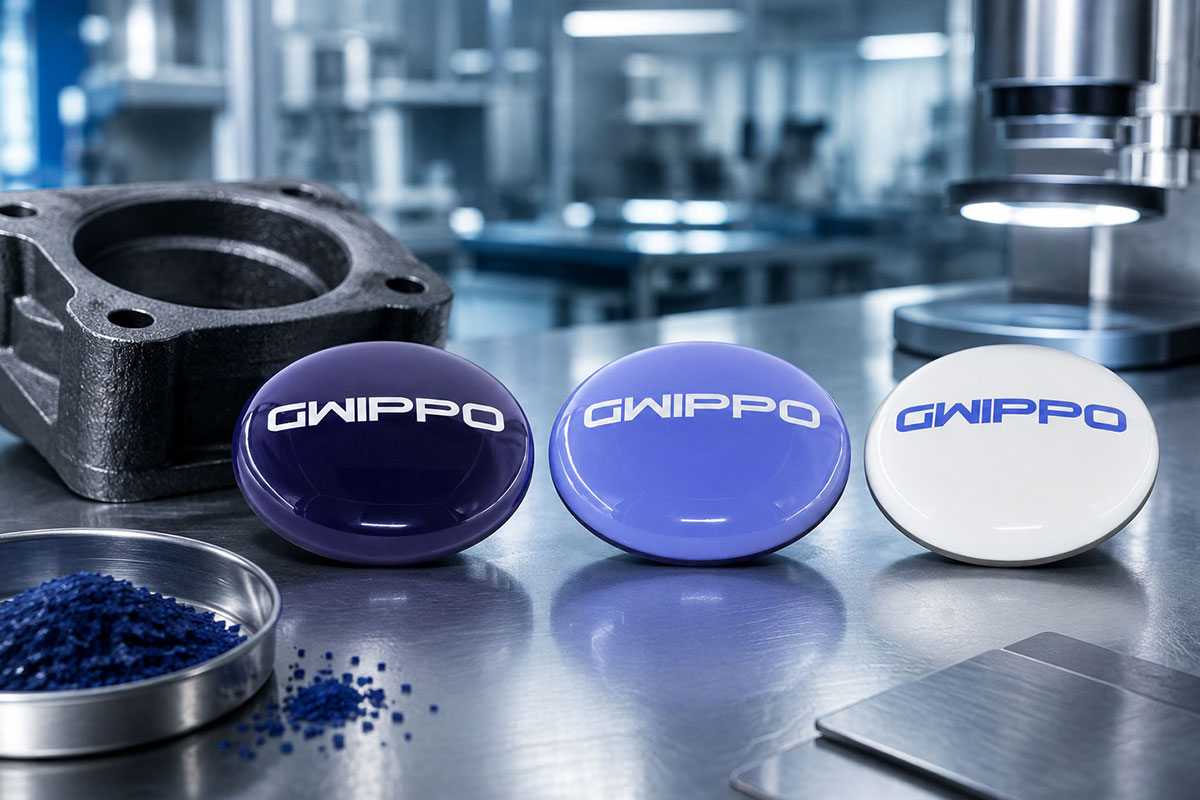
The most suitable coating depends on the substrate, operating temperature, corrosion exposure, chemical environment, expected service life and maintenance requirements. GWIPPO provides vitreous and porcelain enamel frit, glass-lined cover coat and water heater enamel glass lining for applications where glass-like corrosion resistance is required.
What Is Powder Coating?
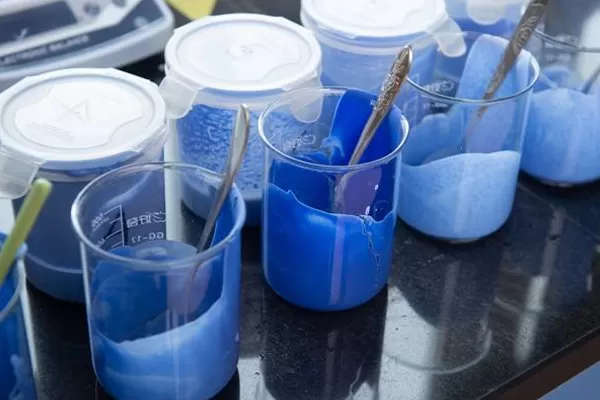
Powder coating is a dry polymer coating applied to a metal surface and cured by heat to form a continuous protective layer. In most industrial production lines, the powder is applied by electrostatic spraying and then cured in an oven to create a hard, uniform finish.electrostatic spray deposition
Powder coating is widely used for metal furniture, appliance shells, machinery housings, aluminum profiles and outdoor hardware. It is valued for efficient material use, color variety, good impact resistance and lower solvent emissions compared with many liquid coatings.
However, powder coating remains an organic coating system. Its performance depends on surface pretreatment, coating thickness, resin chemistry and curing quality. In strong acids, high-temperature water or severe chemical environments, its long-term performance may be more limited than that of a properly selected fired porcelain enamel system.
What Is Enamel Paint?
Enamel paint is a liquid coating designed to dry or cure into a hard, smooth protective surface. It is commonly used on tools, machinery, doors, metal parts and maintenance surfaces where appearance and basic protection are needed.
In industrial coating discussions, the word “enamel” may also refer to porcelain enamel or vitreous enamel, but these materials are very different from ordinary enamel paint. Porcelain enamel is an inorganic, glass-like coating fused to a metal substrate at high temperature rather than a resin-based paint film.porcelain enameling
GWIPPO focuses on industrial porcelain and vitreous enamel materials. Enamel frit is applied to a properly prepared metal substrate and fired to form a dense, smooth, glass-like layer that can provide excellent corrosion resistance, chemical durability and thermal stability in suitable industrial applications.
Powder Coating vs Enamel Paint vs Porcelain Enamel Comparison
These three coating systems differ in application method, curing or firing process, coating structure and service environment. The table below provides a practical comparison for industrial buyers.
Comparison Item | Powder Coating | Enamel Paint | Industrial Porcelain Enamel |
Coating Form | Dry powder | Liquid paint | Glass frit slurry or powder |
Application Method | Electrostatic spray | Brush, spray or dip | Wet spraying, dipping or powder application |
Curing / Firing | Usually heat-cured, depending on the system | Air dry or bake, depending on resin | High-temperature firing, often above 500°C |
Main Strength | Durable decorative finish | Easy application and repair | Chemical, corrosion and heat resistance in suitable applications |
Best Substrate | Conductive metal parts | Metal, wood and general surfaces | Steel, cast iron and other metals |
Repairability | Moderate | Easier local touch-up | Specialized repair process |
Best Use | Furniture, appliances, frames, hardware | Maintenance coating and general metal finish | Chemical vessels, water heaters, heat exchangers and glass-lined equipment |
Substrate quality is especially important for industrial porcelain enamel. Specifications such as ASTM A424/A424M are commonly referenced for steel sheet intended for porcelain enameling, while the final substrate selection should also reflect the product design and firing process.ASTM A424/A424M porcelain-enameling steel sheet specification
How to Choose the Right Coating System
Choosing the right coating means matching the coating system to the actual service environment. Powder coating is often suitable for durable decorative finishes on metal parts, while enamel paint is convenient for general-purpose protection, maintenance and local touch-up.
For chemical equipment, water heater tanks, heat exchanger components and anti-corrosion linings, ordinary enamel paint or powder coating may not provide the required long-term performance. In these applications, fired vitreous or porcelain enamel can be more appropriate because it forms a dense glass-like layer bonded to the metal substrate.
GWIPPO’s glass-lined enamel systems are designed for tanks, vessels, heat-transfer components and related industrial equipment where chemical resistance, surface quality and long-term corrosion protection are important. GWIPPO water heater enamel systems are typically fired at approximately 830–860°C, allowing the enamel to fuse with and bond firmly to the prepared steel substrate.
Conclusion
Powder coating is a dry polymer coating that offers efficient production, attractive appearance and good durability for many metal products. Enamel paint is a liquid coating used for general protection and decoration. Industrial porcelain enamel is fundamentally different: it is a fired, glass-like coating fused to metal and can provide excellent resistance to corrosion, chemicals and elevated temperatures when correctly matched to the application.
For metal furniture, hardware and appliance exteriors, powder coating is often a practical choice. For general maintenance and touch-up, enamel paint may be more convenient. For glass-lined equipment, water heater tanks, heat exchanger components and demanding industrial corrosion environments, porcelain or vitreous enamel provides a more specialized protective coating route.
FAQ
1. What is the main difference between powder coat and enamel paint?
Powder coat is a dry powder coating applied electrostatically and heat-cured, while enamel paint is usually a liquid coating that dries or cures into a hard surface.
2. Is powder coat stronger than enamel paint?
For many metal products, powder coating can provide better durability and impact resistance than ordinary enamel paint, but performance depends on pretreatment, resin type and curing quality.
3. Is porcelain enamel the same as enamel paint?
No. Porcelain enamel is a glass-like coating fired onto metal at high temperature, while enamel paint is usually a resin-based liquid coating.
4. Which coating is better for chemical corrosion?
For severe chemical exposure, a properly selected industrial porcelain enamel or glass-lined coating can be more suitable than ordinary enamel paint or decorative powder coating. Actual performance depends on the chemical medium, concentration, temperature and operating conditions.
5. Can powder coat be used on all metals?
Powder coat works best on conductive substrates that can accept electrostatic application and heat curing. The part must also tolerate the curing temperature.
6. What is the difference between vitreous enamel and glass lining?
Vitreous or porcelain enamel is the broader term for an inorganic glass-like coating fused to metal. Glass lining generally refers to specialized vitreous enamel systems used on chemical vessels, tanks, reactors and related equipment where high chemical and corrosion resistance is required.

 CN
CN