Selecting the right water heater enamel powder is not simply a matter of choosing a chemically resistant glass material. The powder must match the steel substrate, application process, firing window, coating structure, and service conditions of the tank. For purchasing teams, coating manufacturers, and water-heater producers, evaluating these factors before production can reduce defects, improve consistency, and support longer coating life.
What Is Water Heater Enamel Powder
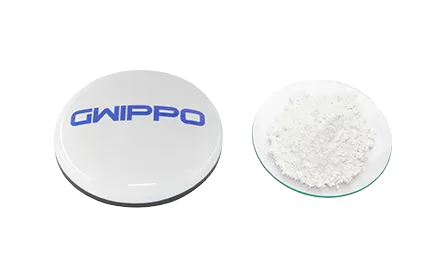
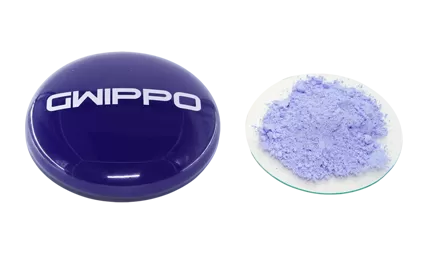
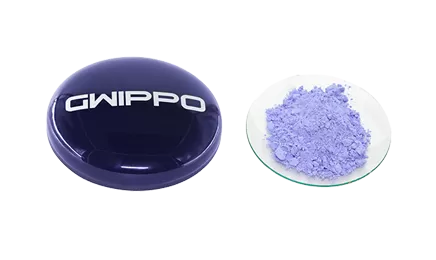
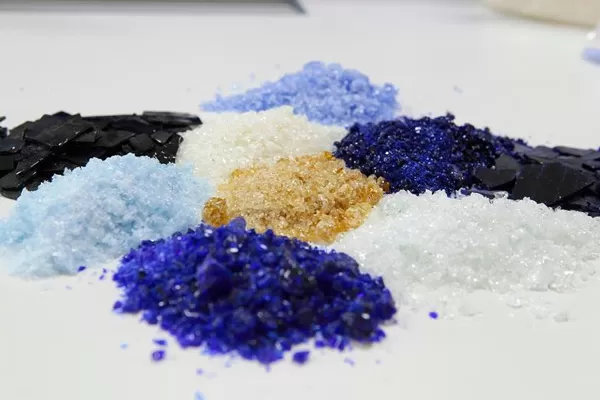
Water heater enamel powder is a milled, glass-based enamel material that forms a protective vitreous coating on the steel surfaces in contact with water after application and firing. Depending on the product, it may be prepared as a slurry for wet application or supplied as a powder designed for a dry application process.
Unlike ordinary organic powder coatings, porcelain enamel is a glass-based coating system. Its performance depends on the formulation of the frit, the powder's processing characteristics, the steel, and the thermal cycle used to fuse the coating.
Specify the application route before selecting the material. For wet dipping or wet spraying, confirm the milling and slurry-preparation requirements, including water quality, additives, density, viscosity and suspension stability. For electrostatic dry application, confirm that the powder is specifically designed for the equipment and charging process. Wet-process enamel and electrostatic powder should not be treated as interchangeable.

Which Properties Should You Check Before Buying
The key selection properties for water heater enamel powder are chemical durability, firing behavior, thermal expansion compatibility, particle-size distribution, application stability, and compatibility with the intended enamel layer.
Property | Why it matters | What to verify |
Firing window | Defines the thermal cycle needed to obtain acceptable fusion and coating quality. | Recommended firing temperature and time |
Thermal expansion | Helps control residual stress after cooling. | Coefficient and substrate compatibility |
Particle size | Affects suspension, sprayability, fusion and coating uniformity. | Sieve analysis and distribution |
Chemical resistance | Protects the tank from hot water, cleaning media and service chemicals. | Relevant test data and service conditions |
Adhesion | Helps maintain coating integrity during handling and thermal cycling. | Adherence data for the specified direct-on or multilayer system |
Particle-size control affects application behavior and the resulting coating. ASTM C285 provides sieve-analysis methods for wet-milled and dry-milled porcelain enamel. Agree the test method and acceptable sieve residue or particle-size distribution with the supplier; a sieve aperture is a measurement condition, not a universal target particle size.
How Do Firing Temperature and Steel Compatibility Affect Selection
Firing compatibility means the enamel powder must develop the required glassy coating within a thermal cycle that is suitable for the steel, layer structure, and production equipment.
Thermal-expansion compatibility helps control residual stress as the coating cools. An unsuitable balance between enamel and steel can contribute to crazing, cracking or spalling. ASTM C539 provides an interferometric method for measuring linear thermal expansion of enamel and glaze frits. Expansion data should be assessed together with coating thickness, geometry, adhesion and firing history.
Confirm whether the material is intended for a direct-on single-coat system, a ground-coat and cover-coat system, or another specified construction. A separate ground coat is not required for every water-heater enamel. For multilayer systems, verify compatibility between the layers and whether the process uses one or multiple firing cycles.
How Can You Match Powder to Water Heater Production
Matching powder to production means selecting a formulation according to the tank steel, coating method, target thickness, firing equipment, production speed, and required service performance rather than selecting by price alone.
A useful supplier qualification should include a technical data sheet, recommended application conditions, firing range, particle-size information, storage requirements, batch consistency data, and representative test results. For drinking-water applications, compliance with the relevant market and product requirements should also be verified.
Where the product and market fall within its scope, DIN 4753-3:2025-12 provides requirements and testing for water-side corrosion protection by enamelling and cathodic protection in drinking-water heaters and storage water heaters. A frit test result alone does not establish compliance of the finished tank.
GWIPPO can help buyers connect powder selection with the actual water-heater process, including enamel formulation, application method, firing conditions, and quality-control requirements. The most useful supplier discussion starts with the tank material, application route, target production conditions, and water-service requirements.
Conclusion
The right water heater enamel powder is the one that provides a controlled balance of fusion behavior, particle size, thermal compatibility, adhesion, chemical durability, and production stability. Before approving a powder, compare its technical data with the actual steel grade, application process, firing cycle, coating structure, and applicable standards. For manufacturers seeking consistent tank quality, a formulation validated under representative production conditions is more meaningful than a generic powder specification.
FAQ
What is the most important factor when selecting water heater enamel powder?
There is no single universal factor. Firing compatibility, steel compatibility, particle size, chemical resistance, adhesion, and application behavior should be evaluated together.
What particle size should water heater enamel powder have?
The required particle-size distribution depends on the formulation and application equipment. Agree limits based on production trials and a specified measurement method, such as ASTM C285 sieve analysis. Do not interpret the sieve aperture as a required size for every particle.
Why does thermal expansion matter?
A mismatch between enamel and steel can increase coating stress during heating and cooling. Thermal-expansion data can therefore help assess compatibility and reduce the risk of crazing.
Should low-temperature enamel powder always be preferred?
Not necessarily. A lower firing temperature can be useful when it fits the production process, but the powder must still provide adequate fusion, adhesion, durability, and compatibility with the substrate and other layers.
What information should I request from an enamel powder supplier?
Request the recommended application method, firing window, particle-size data, storage conditions, batch consistency information, technical test results, and applicable compliance documentation.
Can GWIPPO help select enamel powder for a water heater project?
Yes. GWIPPO can evaluate the application method, steel substrate, firing process and service requirements to help match the enamel system with the production conditions.

 CN